
Key Points:
- Pest treatment kills the bugs, but it does not clear the droppings, debris, and hidden nests left behind.
- A proper post-exterminator cleanup in Jackson, NJ, protects your family from chemical residue and bacteria after treatment.
- Skipping cleanup after pest control treatment can invite pests right back with leftover crumbs, odors, and clutter.
- Professional cleanup after pest treatment reaches spots you cannot, like behind appliances, inside vents, and along baseboards.
So the exterminator just left your Jackson home, and you are probably feeling relieved. That is a fair reaction. Getting rid of roaches, ants, or rodents feels like a real win. But here is something a lot of homeowners do not think about right away.
The chemicals, the dead bugs, the droppings, and the debris left behind still need attention. That is where post-exterminator cleanup in Jackson, NJ comes in. Pest control handles the infestation itself. It does not handle what is left over once the pests are gone.
Skip this step, and you are left with lingering odors, hidden residue, and a home that still does not feel fully clean. This guide walks through why professional cleanup after pest treatment matters, what it involves, and how it keeps your family safe long after the truck pulls out of your driveway.
What Happens During Pest Control, and Why Post-Exterminator Cleanup in Jackson, NJ Matters
Exterminators are trained to target pests. Their job is to spray, bait, or trap, then leave. What they are not usually trained to do is clean up afterward. That part falls on you or on a pest infestation cleanup service you bring in separately.
Think about what pest control actually leaves behind. Dead insects pile up in corners and wall voids. Rodents leave droppings in cabinets and along walls. Sprays leave a fine chemical film on countertops, floors, and furniture. None of that disappears on its own.
The Mess Nobody Talks About
Roaches often die in places you cannot see, inside walls, under appliances, behind baseboards. As they decompose, they release allergens that can trigger asthma and skin reactions in kids. Rodent droppings carry bacteria too, and it does not just vanish once the rodent problem stops.
This is the part of pest treatment nobody warns you about. The bugs are gone, but their remains are still there.
Chemical Residue Is Real
Pesticides do their job, but the residue sticks around on surfaces for days or weeks. Kids crawl on floors. Pets lick paws. That residue gets tracked through the house if nobody wipes it down properly.
Good indoor air quality testing can confirm whether chemical residue or lingering particles are still a concern after treatment. Most families skip this step, but it matters more than people realize.
Why Cleaning After Pest Control Treatment Matters So Much
Cleaning after pest control treatment is not just a nice extra step. It is the difference between a home that is actually safe and one that just looks fine on the surface.
Skipping it does not save you time in the long run. It just delays the real cleanup and usually makes it harder.
Health Risks You Cannot See
Bacteria from droppings, mold spores stirred up during treatment, and leftover pesticide dust can all sit in carpet fibers and upholstery. None of that is visible to the naked eye.
If moisture was already an issue before pest control, treatment can sometimes stir up mold growth hiding in damp corners. A musty smell after treatment is worth taking seriously, not ignoring.
Preventing a Repeat Infestation
- Crumbs and food residue left behind attract new pests within weeks
- Standing odors can pull pests back to the same spot
- Cluttered corners give new bugs somewhere to hide
- Leftover nesting material signals “safe” to incoming pests
Getting rid of these triggers with odor control and thorough cleaning is one of the best ways to stop the cycle from starting over again.
What a Post-Extermination Sanitation Services Visit Actually Covers
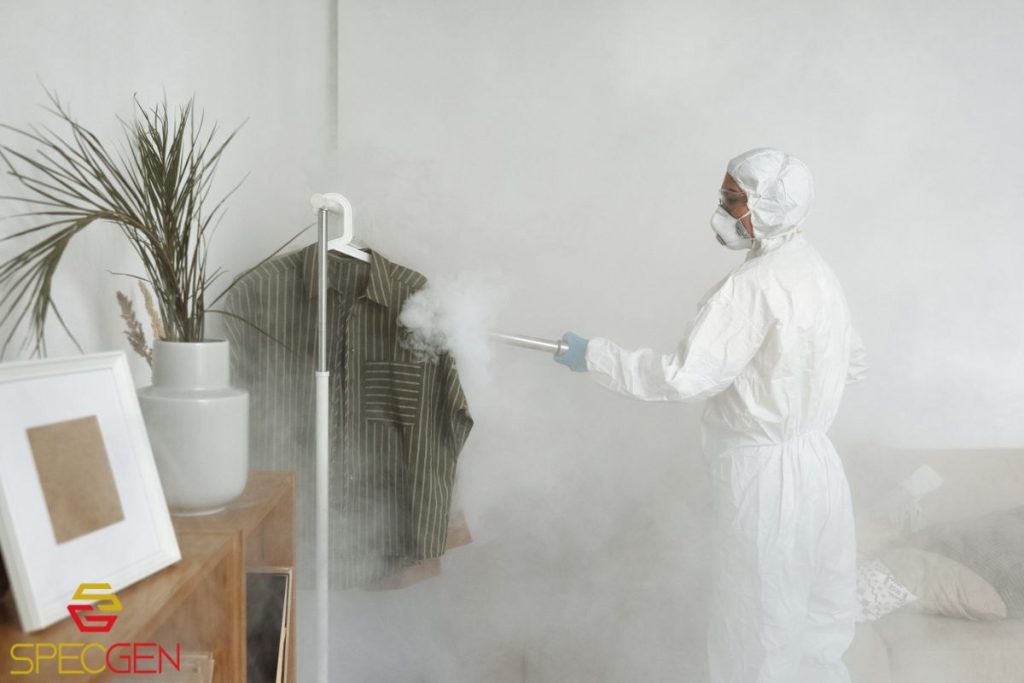
A real post-extermination sanitation services visit goes far beyond wiping down counters. It targets the areas exterminators do not touch, and it uses tools most households simply do not have.
Professionals know where pests hide and where residue collects. That is knowledge you cannot get from a bottle of spray cleaner and a paper towel. In short, exterminator aftermath cleaning is what turns a treated house back into a truly clean home.
Deep Cleaning the Right Areas
- Baseboards, vents, and behind large appliances
- Cabinet interiors and pantry shelving
- Carpets, rugs, and upholstered furniture
- Wall voids near past infestation points
This is where deep cleaning services make a real difference. It is not about tidying up. It is about removing every trace the pests left behind, not just the parts you can see.
Here is a quick look at how a standard clean stacks up against a real post-exterminator visit:
| Area | Standard Cleaning | Post-Exterminator Cleanup |
| Baseboards & vents | Skipped or lightly wiped | Deep cleaned and sanitized |
| Carpets & rugs | Vacuumed only | Treated for residue and allergens |
| Cabinets & pantry | Not typically touched | Wiped down and disinfected |
| Wall voids near nests | Not accessible | Inspected and treated where needed |
Tools Homeowners Do Not Have
Professionals use HEPA vacuums, enzyme cleaners, and steam equipment that break down residue instead of just pushing it around. A regular vacuum and some dish soap will not touch dried pesticide film or ground-in droppings.
For carpets especially, proper carpet cleaning equipment lifts contamination out of the fibers instead of just cleaning the surface layer.
Cleanup After a Roach Infestation Needs Special Attention
Cleanup after a roach infestation is its own challenge. Roaches leave behind more allergens than almost any other pest, and their droppings can trigger asthma in especially sensitive children.
Even after the roaches themselves are gone, that allergen load can stay in your home for months if it is not properly cleaned.
Roach Droppings and Allergens
Roach droppings and shed skin contain proteins that trigger allergic reactions and asthma flare-ups, especially in young kids. These particles settle into carpet, bedding, and air ducts.
A thorough exterminator aftermath cleaning removes this allergen load instead of just spreading it around during a quick wipe-down. Cleanup after a roach infestation should always include vents and carpet fibers, not just kitchen counters.
Odor That Lingers For Weeks
Roach infestations leave a distinct, musty smell that can hang around long after the bugs are dealt with. That smell comes from droppings, shed skins, and pheromone trails left on surfaces.
A visit built around medical-grade cleaning can knock that smell out for good instead of just masking it with an air freshener. This matters even more in homes with young children or in a space that doubles as a licensed daycare center cleaning site.
When to Call a Pest Infestation Cleanup Service
Not every pest issue needs a full pest infestation cleanup service, but some situations really do call for one. If you are unsure, look at how bad the mess was before treatment started.
Was it a small ant problem in the kitchen? A quick wipe down might be enough. Was it a roach or rodent infestation that had been going on for months? That is a different story, and that is when a dedicated exterminator’s aftermath cleaning visit makes the difference.
Signs You Need Help
- Visible droppings in multiple rooms, not just one spot
- A lingering smell that will not go away with regular cleaning
- Pests were found inside walls, vents, or under flooring
- Kids or pets in the home with allergies or asthma
- The infestation lasted longer than a few weeks before treatment
What to Expect From the Visit
A good cleaning crew will walk through your home first, checking areas exterminators typically miss. Floors, especially, tend to trap the most residue and debris.
Professional floor cleaning paired with sanitizing treatment covers both the visible mess and what has settled deep into the flooring. If your home has a mix of hardwood, tile, and carpet, each surface needs a slightly different approach to come out truly clean.
Bugs Are Gone. Let’s Finish the Job, Jackson.
Pest control handles the infestation. It does not handle the mess, the residue, or the smell left behind. A proper post-exterminator cleanup in Jackson, NJ, closes that gap, so your home actually feels clean again, not just bug-free.
SpecGen brings HEPA vacuums, enzyme cleaners, and trained crews to homes across Jackson for exterminator aftermath cleaning that reaches every corner an exterminator leaves behind. From carpets to cabinets, the whole space gets treated, not just the spots you can see.
Reach out to SpecGen today to schedule your post-treatment cleanup and get your home back to a truly livable, allergen-free condition.
Frequently Asked Questions
Wait until the chemicals fully dry, usually 24 to 48 hours, then start cleaning. Check the instructions from your exterminator for exact timing before wiping surfaces or vacuuming carpets.
Light surface wiping is fine, but hidden residue, droppings, and allergens usually need professional tools like HEPA vacuums and enzyme cleaners to be removed completely.
Yes, when done properly. Odors from droppings and shed skin sit deep in fabric and flooring, so deep cleaning removes the source instead of masking it.
Most homes take a few hours, depending on the size of the infestation and how many rooms are affected. Larger jobs may need a full day.
Yes. Professionals use tested products and wait for proper drying time, which actually lowers exposure risk compared to skipping cleanup altogether.